
Software Product Development: From Business Idea to Market-Ready Product
A software idea can sound brilliant on paper and still fail in the real world.
The difference between an idea and a successful software product is not simply the quality of the code. A market-ready product requires a clear problem, defined users, practical product strategy, thoughtful UX, reliable architecture, disciplined development, security, testing, measurable outcomes, and a plan for continuous improvement.
That is why software product development should be treated as a complete business and technology process—not just a programming project.
Whether you are building a SaaS platform, mobile application, B2B product, customer portal, marketplace, workflow platform, or AI-powered application, the journey usually begins with a simple question:
What problem are we solving, and why should someone use this product?
Everything that follows should support the answer.
What Is Software Product Development?
Software product development is the process of transforming a business idea or identified market problem into a usable, commercially viable, and maintainable software product.
It typically combines:
- Product strategy
- Market and user research
- Business requirements
- UX/UI design
- Technology planning
- Software architecture
- MVP development
- Testing and quality assurance
- Security
- Deployment
- Analytics
- User feedback
- Continuous improvement
- Scaling
This makes product development different from simply building software for a one-time internal requirement.
A product has users.
It has expectations.
It competes for attention.
It needs to evolve.
And ultimately, it needs to create measurable value.
The Journey From Idea to Product
A useful way to understand the process is:
Idea → Problem → Validation → Product Strategy → Prototype → MVP → Development → Testing → Launch → Feedback → Growth
Skipping stages does not necessarily make development faster.
Sometimes it simply moves problems downstream, where they become more expensive to fix.
For example, discovering during development that users do not actually need a major feature is much more costly than discovering it during early product research.
Step 1: Start With the Problem, Not the Feature
One of the most common product-development mistakes is beginning with a feature list.
A founder may say:
“I want to build an app with AI, dashboards, notifications, payments, analytics, and automation.”
That describes technology.
It does not yet describe a product.
A stronger starting point is:
- Who has the problem?
- What exactly is frustrating them?
- How do they solve it today?
- What does the current solution cost?
- Why are existing alternatives insufficient?
- How frequently does the problem occur?
- What would make users change their current behavior?
The answers provide the foundation for product decisions.
A Simple Problem Statement
A useful product statement can follow this structure:
For [target user], who struggles with [specific problem], our product helps them [desired outcome] by [core solution].
This forces the team to focus on the outcome rather than technology for its own sake.
Step 2: Validate the Product Idea
Validation does not mean proving that everyone will buy the product.
It means reducing uncertainty before making a major development investment.
Depending on the product, validation can include:
- Customer interviews
- Surveys
- Competitor research
- Landing-page experiments
- Prototype testing
- Waitlists
- Pilot programs
- Existing customer feedback
- Search-demand analysis
- Market research
The objective is to answer practical questions.
Is the problem real?
Is it important enough to solve?
Do the intended users recognize it?
Are they willing to change their existing behavior?
Can the proposed solution realistically create value?
A technically excellent product can still struggle if it solves a problem that users do not consider important.
Step 3: Define the Target User
“Everyone” is rarely a useful initial product audience.
A product becomes easier to design when the team understands its first important user group.
Define:
- User type
- Role
- Goals
- Pain points
- Existing workflow
- Technical familiarity
- Buying authority
- Usage environment
- Key objections
For a B2B product, the person using the software may not be the person purchasing it.
You may have:
User → Manager → Decision-maker → Administrator
Each can have different expectations.
Product development needs to account for those differences.
Step 4: Study the Competitive Landscape
Competition is not limited to companies selling similar software.
Users may already solve the problem through:
- Spreadsheets
- Manual processes
- Internal tools
- Existing enterprise platforms
- Outsourced services
Understanding these alternatives is essential.
The key question is not simply:
“Who are our competitors?”
It is:
“What does the customer do instead of using our product?”
That provides a more realistic view of the market.
Step 5: Define the Product Scope
Once the problem and users are understood, determine what the first version actually needs.
This is where product teams often struggle.
Every stakeholder has another feature.
But adding features does not automatically add product value.
A useful prioritization framework is:
Must Have
Without it, the product cannot deliver its core outcome.
Should Have
Important, but the product can launch without it.
Could Have
Useful enhancements that can be considered later.
Not Yet
Features that may be valuable but are intentionally excluded from the current release.
This creates discipline.
A product roadmap is not a list of everything the company wants.
It is a sequence of what should be built and when.
MVP: What Should the First Version Include?
An MVP—or minimum viable product—is the smallest version of a product capable of testing its core value proposition with real users.
It is not necessarily a poor-quality version.
A good MVP should be:
- Useful
- Reliable
- Understandable
- Focused
- Testable
- Secure enough for its intended environment
The goal is to reduce unnecessary development while learning from real usage.
For example, a complex marketplace might eventually require:
- Advanced recommendations
- Loyalty programs
- Multiple payment methods
- AI assistants
- Seller analytics
- Automated marketing
- Dynamic pricing
But the first version may only need:
User registration → product discovery → checkout → payment → order management
The MVP should prove the fundamental transaction before the team builds the ecosystem around it.
Prototype vs PoC vs MVP
These terms are often confused.
Prototype
A prototype primarily explores the user experience and product concept.
It may not contain production-ready functionality.
Proof of Concept
A PoC tests whether a particular technical approach is feasible.
For example:
Can this AI model process our documents accurately enough?
MVP
An MVP is a usable product version designed to test the core value proposition with real users.
The three serve different purposes.
A prototype tests experience.
A PoC tests technical feasibility.
An MVP tests product value.
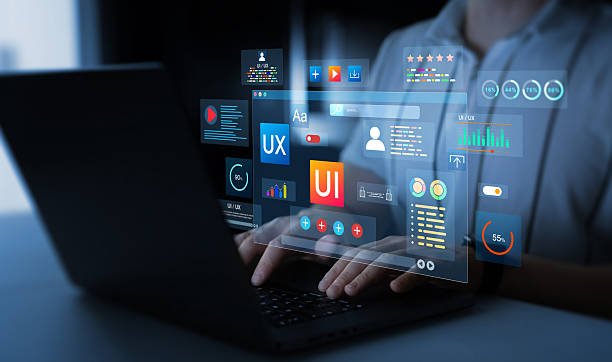
UX/UI Design Comes Before Heavy Development
A product can contain excellent technology and still be frustrating to use.
UX design determines how users move through the product.
UI design determines how those experiences are presented visually.
Important considerations include:
- Information architecture
- Navigation
- User journeys
- Onboarding
- Forms
- Search
- Dashboards
- Mobile responsiveness
- Accessibility
- Error states
- Empty states
- Confirmation messages
- Loading states
The design should answer an important question at every stage:
What does the user need to understand or accomplish next?
For accessibility guidance, product teams can use the W3C Web Content Accessibility Guidelines as a reference when designing accessible digital experiences.
Build the Product Architecture Before Building Everything
Software architecture determines how the product will behave as it grows.
The team needs to consider:
- Frontend
- Backend
- APIs
- Database
- Authentication
- Authorization
- File storage
- Third-party integrations
- Background jobs
- Caching
- Monitoring
- Deployment
- Security
A small MVP does not necessarily require a complicated architecture.
In many situations, a well-designed modular monolith can be more practical than immediately introducing microservices.
The architecture should match the product’s current requirements while leaving reasonable room for growth.
Choosing the Technology Stack
Technology choices should follow product requirements.
Depending on the product, the stack may include:
Frontend
Web applications might use technologies such as React, Vue, Angular, or other modern frameworks.
Backend
Possible approaches include Node.js, Python, Java, .NET, PHP, Go, and other technologies.
Database
The choice may involve relational databases, document databases, search engines, or specialized data stores.
Infrastructure
Cloud infrastructure can provide flexible computing, storage, networking, monitoring, and deployment options.
There is no universally “best” technology stack.
The right stack depends on:
- Product requirements
- Team expertise
- Performance needs
- Security requirements
- Budget
- Development speed
- Integration requirements
- Expected scale
- Long-term maintenance
Choosing technology because it is currently popular is not a product strategy.
API-First Thinking
Modern software products rarely operate in isolation.
They may need to communicate with:
- Payment gateways
- CRMs
- ERPs
- Email platforms
- Analytics systems
- Shipping providers
- Identity services
- AI models
- Mobile applications
- Partner platforms
A well-designed API layer makes these integrations easier to manage.
It also allows different interfaces—such as web and mobile applications—to use the same backend capabilities.
For a product expected to grow, API design should consider authentication, authorization, validation, versioning, rate limits, error handling, monitoring, and documentation from the beginning.
Security Should Be Designed Into the Product
Security is not a feature that should be added immediately before launch.
It belongs throughout the product lifecycle.
Depending on the product, this can include:
- Secure authentication
- Role-based access control
- Authorization checks
- Encryption
- Secure API design
- Input validation
- Session management
- Secrets management
- Dependency management
- Logging
- Monitoring
- Backup and recovery
- Security testing
The OWASP Top 10 is a useful reference for understanding common web application security risks.
For products handling sensitive information, security requirements may need to go much further than general application-security guidance.
Data Architecture Matters
A software product is only as useful as the information it can reliably work with.
Database planning should consider:
- Data relationships
- Indexing
- Data integrity
- Query performance
- Backups
- Retention
- Access control
- Migration strategy
- Reporting requirements
Do not design the database purely around today’s screens.
Think about the questions the product may need to answer six months or two years later.
For example:
What happened?
Who performed the action?
When did it happen?
What changed?
Which customer or account was affected?
Good data architecture supports both product functionality and future analytics.
AI Can Become a Product Capability
AI is increasingly becoming part of software products, but it should be introduced with a clear purpose.
Potential applications include:
- Intelligent search
- Recommendations
- Document processing
- Natural-language interfaces
- Content assistance
- Predictive analytics
- Customer support
- Personalization
- AI agents
- Workflow automation
The question should not be:
“How can we add AI?”
Instead:
“Which user problem can AI solve better than our existing approach?”
For some products, AI may be central to the value proposition.
For others, traditional software logic may remain the better solution.
Testing a Market-Ready Product
Testing is much broader than checking whether buttons work.
A professional product-development process may include:
Functional Testing
Does each feature behave according to its requirements?
Integration Testing
Do different systems communicate correctly?
Performance Testing
Does the application remain responsive under expected loads?
Security Testing
Can common vulnerabilities or unauthorized actions be identified and prevented?
Usability Testing
Can real users complete important tasks without unnecessary friction?
Compatibility Testing
Does the product work across relevant browsers, devices, and operating environments?
Regression Testing
Do new changes break existing functionality?
The goal is not to eliminate every possible defect.
It is to systematically reduce unacceptable risk before and after launch.
Product Analytics: Know What Users Actually Do
After launch, assumptions become less valuable than observed behavior.
Analytics can help answer:
- Where do users enter?
- Where do they leave?
- Which features are used?
- Which features are ignored?
- How long does onboarding take?
- Which workflows create friction?
- Which actions correlate with retention?
- Which customer segments behave differently?
A product team should identify its important events and business outcomes before collecting endless metrics.
More data does not automatically mean better decisions.
Launch Is the Beginning, Not the Finish
A common misconception is:
Development complete = product complete.
In reality:
Launch = beginning of the product-learning cycle.
After launch, teams should collect:
- User feedback
- Support requests
- Analytics
- Error reports
- Feature requests
- Performance information
- Customer interviews
- Business results
Then use that information to improve the product.
This creates a cycle:
Build → Measure → Learn → Improve → Repeat
That cycle is one of the defining characteristics of modern product development.
Scaling the Product
A product that reaches more users eventually faces new technical challenges.
These can include:
- Higher traffic
- More database operations
- Larger datasets
- Increased API usage
- More concurrent users
- Larger file storage
- Background processing requirements
- Third-party service limits
Scaling should not mean immediately rebuilding everything.
Start by identifying the actual bottleneck.
It might be:
- Database queries
- Application servers
- Network latency
- External APIs
- Poor caching
- Inefficient background jobs
- Large file processing
- A specific service
Measure first.
Then optimize the constraint.
Technical Debt: The Cost of Moving Too Fast
Startups and growing companies often need speed.
That is reasonable.
But there is a difference between intentionally simplifying an MVP and creating unmanaged technical debt.
Technical debt can appear as:
- Duplicated code
- Fragile integrations
- Missing tests
- Poor documentation
- Inconsistent architecture
- Hard-coded business rules
- Weak monitoring
- Unclear ownership
Not every shortcut is bad.
The problem occurs when temporary decisions become permanent without being revisited.
A healthy product roadmap therefore includes both:
Customer-facing improvements + technical improvements
How Much Does Software Product Development Cost?
There is no single price for building a software product.
Cost depends on factors such as:
- Product complexity
- Number of platforms
- UX requirements
- Number of user roles
- Integrations
- Backend complexity
- AI requirements
- Security requirements
- Infrastructure
- Testing requirements
- Development team
- Geographic location
- Maintenance expectations
A basic MVP and a multi-tenant enterprise SaaS platform can have dramatically different requirements.
A more useful approach is to divide investment into stages:
Discovery → Design → MVP → Launch → Optimization → Scale
This makes it easier to control scope and evaluate whether additional investment is justified.
How to Reduce Product Development Risk
You cannot remove all product-development risk.
You can reduce avoidable risk.
Reduce Product Risk
Validate the problem and target users early.
Reduce Technical Risk
Use prototypes and PoCs for uncertain technical components.
Reduce Scope Risk
Define a disciplined MVP.
Reduce Security Risk
Design security into architecture and development.
Reduce Usability Risk
Test prototypes and workflows with representative users.
Reduce Scaling Risk
Design sensible architecture and monitor actual bottlenecks.
Reduce Business Risk
Define measurable product outcomes before development.
Common Software Product Development Mistakes
Building Too Many Features
More features can make a product harder to understand and maintain.
Starting Development Without Validation
A development team can build exactly what was requested while the market wants something else.
Copying Competitors
Competitor features can provide useful research, but copying them does not automatically create differentiation.
Choosing Technology First
Technology should support the product strategy, not replace it.
Ignoring UX
Users experience the product through interfaces and workflows, not source code.
Treating Security as a Final Checklist
Security problems can become expensive when discovered late.
Ignoring Analytics
Without product data, teams may rely heavily on assumptions.
Launching Without a Feedback Process
A product needs a mechanism for learning after launch.
Overengineering the First Version
Building for millions of users before acquiring the first meaningful users can consume resources without validating demand.
When Should You Build Custom Software?
Custom software product development can make sense when a company needs:
- A differentiated digital product
- Proprietary workflows
- Specialized business logic
- A new SaaS platform
- Unique customer experiences
- Complex integrations
- Specialized AI capabilities
- Greater control over data and architecture
It may be less appropriate when a reliable off-the-shelf solution already solves the problem adequately.
The decision should come from the product’s requirements, economics, differentiation, and long-term strategy.
Choosing a Software Product Development Partner
The development partner matters because product development involves much more than coding.
Look for evidence of:
- Product thinking
- Technical architecture capability
- UX/UI expertise
- Security practices
- Testing discipline
- API and integration experience
- Cloud knowledge
- Communication processes
- Post-launch support
- Ability to explain technical decisions clearly
Ask potential partners how they handle uncertainty.
A strong partner should be able to say:
“We do not know yet. Let’s test it.”
That can be more valuable than confidently promising that every technical challenge has an immediate answer.
A Practical Software Product Development Roadmap
A simplified roadmap might look like this:
Phase 1: Discovery
Define the problem, users, market, goals, constraints, and success metrics.
Phase 2: Product Strategy
Define the value proposition, core workflows, MVP scope, roadmap, and priorities.
Phase 3: UX/UI
Create user flows, wireframes, prototypes, visual design, and usability tests.
Phase 4: Technical Architecture
Define the stack, APIs, database, infrastructure, security model, integrations, and deployment approach.
Phase 5: MVP Development
Build the smallest complete version capable of delivering the core product value.
Phase 6: Quality Assurance
Test functionality, integrations, security, performance, usability, and compatibility.
Phase 7: Launch
Deploy the product, monitor it, onboard users, and establish support processes.
Phase 8: Learn and Improve
Use analytics and user feedback to prioritize improvements.
Phase 9: Scale
Improve infrastructure, architecture, features, automation, and operational processes as demand grows.
The Difference Between Software and a Software Product
This distinction is worth remembering.
Software is technology that performs a function.
A software product is a complete experience built around a user problem and a business outcome.
A product therefore requires more than:
Code + Database + Server
It requires:
Problem + Users + Experience + Technology + Business Model + Distribution + Feedback + Continuous Improvement
That is why product development needs collaboration between business, product, design, engineering, marketing, operations, and customers.
Frequently Asked Questions
What is software product development?
Software product development is the process of turning a validated business problem or idea into a usable, scalable, secure, and market-ready software product.
How long does software product development take?
There is no universal timeline. A focused MVP can be developed much faster than a complex enterprise platform with multiple integrations, user roles, compliance requirements, and advanced functionality.
What is an MVP in software development?
An MVP is a focused product version that delivers the core value proposition and allows a team to learn from real users without building every planned feature.
Should a startup build an MVP first?
For many startups, an MVP can reduce unnecessary development and provide real-world learning. The appropriate scope depends on the product and the risks being tested.
What is the difference between a prototype and an MVP?
A prototype primarily explores an idea or user experience. An MVP is a usable product intended to test the core value proposition with real users.
Does every software product need AI?
No. AI should be used when it provides meaningful value for a specific product problem. Traditional software logic may be more appropriate for deterministic workflows.
What technology stack should a software product use?
The stack should be selected according to product requirements, team expertise, security, scalability, performance, integrations, budget, and maintenance needs rather than popularity alone.
How can software products scale?
Products can scale through appropriate architecture, database optimization, caching, infrastructure scaling, efficient APIs, background processing, monitoring, and targeted optimization of actual bottlenecks.
How important is UX in software product development?
UX is critical because users experience the product through its workflows and interfaces. Poor usability can undermine otherwise capable technology.
What happens after a software product launches?
Launch begins the next stage of product development. Teams should monitor performance, analyze user behavior, collect feedback, resolve issues, and continuously improve the product.
Final Takeaway
A successful software product rarely emerges from one brilliant idea or one impressive piece of code.
It comes from making hundreds of connected decisions correctly:
Solve the right problem.
Understand the right users.
Validate assumptions.
Build a focused MVP.
Design an intuitive experience.
Choose technology deliberately.
Create a secure and maintainable architecture.
Test with real-world conditions.
Measure what users actually do.
Improve based on evidence.
Scale when the product earns the need to scale.
That is the real purpose of software product development.
The objective is not simply to launch software.
It is to transform an idea into a product that people can understand, use, trust, and continue finding valuable as the business grows.
For businesses planning a new digital product, the right development strategy can turn an uncertain idea into a structured path from concept to MVP, MVP to market, and market to scalable product.