
Customer Data Platform: 7 Smart Benefits for Growing Businesses
A customer visits your website, checks a product, leaves without purchasing, and returns a few days later through an email campaign. Your sales team may also have spoken to that person over the phone. Meanwhile, your marketing platform records a separate interaction.
The problem? These activities may be stored in different systems.
When customer information is scattered across websites, email platforms, sales software, and other tools, it becomes difficult to understand the complete customer journey.
A customer data platform helps address this problem by bringing customer information together in a more organized way. Instead of looking at disconnected interactions, businesses can build a more consistent picture of how customers engage with their brand.
For companies investing in digital marketing, eCommerce, and customer experience, this can be a valuable step towards better decisions.
Let’s look at what a customer data platform does, why businesses use one, and what to consider before implementing it.
What Is a Customer Data Platform?
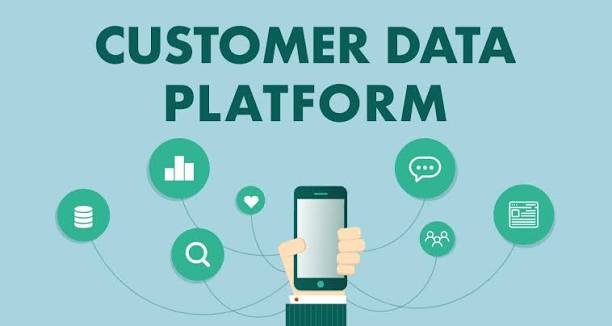
A customer data platform, commonly called a CDP, is software that collects and organizes customer information from multiple sources to create unified customer profiles.
These sources might include:
- Website visits and browsing activity
- Mobile application interactions
- Email engagement
- Purchase history
- Customer service interactions
- Loyalty programme activity
- CRM and marketing systems
For example, someone might browse your website, subscribe to your newsletter, and later purchase a product. A CDP can help connect these interactions when the available identifiers and data permissions allow it.
This gives marketing and customer experience teams a more connected view of customer activity.
A CDP is not simply another database. Its purpose is to make customer information more useful across different business activities.
7 Smart Benefits of a Customer Data Platform
1. Bring Customer Information Into One Place
One of the biggest challenges for growing businesses is managing customer information across several tools.
Your sales team may use a CRM, marketing may rely on an email platform, and your website may collect visitor activity through analytics tools.
Without proper integration, teams often work with incomplete information.
A customer data platform helps collect information from connected sources and organize it into customer profiles.
This can reduce information gaps and make it easier for authorized teams to access relevant customer insights.
However, not every source automatically connects to every CDP. Integration capabilities should always be checked before selecting a platform.
2. Understand the Complete Customer Journey
Customers rarely make decisions after just one interaction.
Someone might discover your company through a search engine, visit your website, read a blog, return through social media, and eventually contact your sales team.
Looking at each interaction separately can make the journey difficult to understand.
A CDP can help connect available customer interactions and reveal patterns across different touchpoints.
Businesses can use these insights to understand:
- Which channels introduce new customers
- What content attracts attention
- Where visitors lose interest
- Which interactions happen before a purchase
- How customers engage after buying
This information can help businesses improve the journey instead of focusing on isolated marketing activities.
3. Create More Relevant Marketing Campaigns
Nobody enjoys receiving emails about products they have already purchased or offers that have nothing to do with their interests.
Generic marketing often happens because businesses do not have enough connected customer information.
A CDP can support more relevant audience segmentation using information such as purchase history, engagement, and permitted customer preferences.
For example, an online clothing store could create different audience groups for:
- Customers who frequently purchase formal wear
- Visitors interested in a particular product category
- Existing customers who have not purchased recently
- Customers who regularly engage with new collections
Marketing teams can then create campaigns that are more relevant to each group.
Personalization should always respect customer preferences and applicable privacy requirements. More data does not automatically mean better communication.
4. Improve Coordination Between Sales and Marketing
Sales and marketing teams often work towards the same business goal, but they may use different systems and information.
Marketing might know which pages a visitor explored, while the sales team may only see the details entered into an enquiry form.
A connected customer data setup can help authorized teams access more consistent information.
This may improve:
- Lead qualification
- Customer follow-ups
- Campaign planning
- Sales conversations
- Customer segmentation
For example, if a prospective customer repeatedly explores a particular service page and then submits an enquiry, the sales team may have useful context for the conversation.
The important part is ensuring that information is shared appropriately and that teams understand how to use it.
5. Make Customer Experiences More Consistent
Customers expect a business to provide a reasonably consistent experience across its website, emails, applications, and support channels.
Imagine purchasing a product and then receiving repeated promotional messages asking you to buy the same product.
Such experiences can make a company appear disconnected.
A customer data platform can help connected systems use updated customer information to support more consistent communication.
Depending on the integrations available, businesses may use it to:
- Exclude recent buyers from certain campaigns
- Adjust messages based on customer activity
- Recognize existing customers across channels
- Support relevant product recommendations
- Coordinate marketing and service interactions
This does not mean every system automatically updates instantly. Data synchronization and activation capabilities depend on the selected platform and integration setup.
6. Support Better Marketing Decisions
Businesses spend money on advertising, content, email campaigns, and customer acquisition.
But without connected data, understanding which activities contribute to valuable customer relationships can be difficult.
A CDP can help organize customer-level information that supports more informed analysis.
For example, a company may discover that customers who read certain educational articles are more likely to request a consultation later.
That insight can influence content planning and marketing investment.
A CDP does not replace analytics or business intelligence software. Instead, it can provide organized customer information that other tools use for reporting and analysis.
7. Build a Stronger Foundation for Business Growth
A small business might begin with a website, a basic CRM, and an email marketing tool.
As the company grows, it may add an eCommerce platform, customer support software, mobile applications, and advertising systems.
More tools can create more disconnected information.
A properly planned CDP can help businesses manage this growing customer data environment.
It can support future improvements in:
- Customer segmentation
- Marketing automation
- Personalization
- Retention campaigns
- Cross-channel communication
- Customer behaviour analysis
The benefit depends on having reliable data, suitable integrations, clear ownership, and a realistic implementation plan.
Customer Data Platform vs CRM: What Is the Difference?
A customer data platform and a customer relationship management system may work together, but they serve different purposes.
| Area | Customer Data Platform | CRM |
|---|---|---|
| Main purpose | Unify customer data | Manage customer relationships |
| Typical information | Behaviour and interactions from connected sources | Leads, contacts, sales and communication records |
| Common users | Marketing and data teams | Sales and customer service teams |
| Main benefit | Connected customer profiles | Organized relationship management |
| Common use | Segmentation and audience activation | Sales pipelines and follow-ups |
A CRM is useful for managing sales activities and customer relationships. A CDP focuses on collecting and organizing customer information from multiple sources.
Some platforms offer overlapping features, so businesses should compare actual capabilities rather than relying only on product labels.
How to Choose the Right Customer Data Platform
Not every business needs an advanced CDP. The right decision depends on the amount of customer data you manage, the number of connected tools, and the problems you want to solve.
Before selecting a platform, consider these factors.
Check Data Integration Options
List the systems your business already uses.
Check whether the platform supports the required integrations, APIs, connectors, and data formats.
An expensive platform is not useful if it cannot connect reliably with your existing technology.
Understand Identity Resolution
Identity resolution is the process of connecting records that belong to the same customer.
For example, a visitor might browse anonymously and later submit an email address.
The platform’s ability to connect such interactions depends on the identifiers available, matching rules, consent, and technical capabilities.
Ask vendors how their system handles duplicate records and uncertain matches.
Review Privacy and Security Features
Customer information must be handled responsibly.
Look for:
- Access controls
- Data encryption
- Consent management integrations
- Data retention settings
- Deletion and correction workflows
- Audit logs
- Vendor security documentation
For businesses operating in or serving customers in different regions, relevant privacy laws and obligations should be reviewed before implementation.
The European Union’s General Data Protection Regulation (GDPR) is an important reference for organizations handling personal data within its scope.
Consider Ease of Use
A CDP should help teams work more effectively, not create another complicated system.
Check whether marketing and technical teams can understand the interface, build audiences, review profiles, and manage integrations without unnecessary effort.
Compare Total Ownership Costs
Do not look only at the starting subscription price.
Consider implementation, data volume, integrations, support, training, maintenance, and future scaling.
The most suitable platform is the one that solves your actual requirements within a manageable budget.
Common Mistakes to Avoid When Implementing a CDP
A customer data platform can create value, but poor planning can turn it into an expensive technology project.
Avoid these common mistakes:
Collecting data without a purpose: Decide what business questions the data should help answer.
Ignoring data quality: Duplicate, outdated, and inconsistent records can reduce the reliability of customer profiles.
Assuming every customer can be identified: Anonymous activity cannot always be connected to a known individual.
Overlooking privacy requirements: Collect and use information only with an appropriate legal basis and suitable controls.
Choosing a platform before reviewing existing tools: Understand your current technology environment first.
Expecting instant results: Integration, testing, data cleanup, and team adoption require time.
Ignoring employee training: Teams need to understand how to use customer information responsibly and effectively.
How HiveRift Can Help With Customer Data Solutions
Managing customer information across multiple platforms can become difficult as a business grows. The challenge is not always a lack of software. Sometimes the real issue is that existing systems do not communicate properly.
At HiveRift, we understand the importance of building connected digital solutions that support everyday business operations.
From custom software and web application development to API integrations and business-focused digital systems, the right technology setup can help businesses organize information and improve internal workflows.
If your business is struggling with disconnected tools or inefficient data management, explore HiveRift to understand how a suitable digital solution can support your next stage of growth.
Conclusion
A customer data platform helps businesses move beyond disconnected customer records and build a more organized view of customer interactions.
It can support better audience segmentation, more relevant marketing, stronger coordination between teams, and more informed decisions.
However, buying a CDP should not be the first step. Start by understanding where your customer information currently lives, what problems exist, and which improvements would make the biggest difference.
Once those requirements are clear, you can decide whether a customer data platform is the right investment for your business.
The goal is simple: make customer information more useful while treating it with care and responsibility.
Frequently Asked Questions (FAQs)
1. What is a customer data platform used for?
A customer data platform collects and organizes customer information from multiple connected sources to create unified profiles. Businesses use it for segmentation, personalization, marketing activation, and customer insights.
2. Is a customer data platform the same as a CRM?
No. A CRM primarily manages customer relationships, sales activities, and interactions. A CDP focuses on collecting and organizing customer information from different sources. Both can work together.
3. Do small businesses need a customer data platform?
Not necessarily. Small businesses with limited customer data and a few connected tools may manage effectively with a CRM and analytics software. A CDP becomes more relevant as data sources and marketing requirements grow.
4. What type of information can a CDP collect?
Depending on integrations and permissions, it may collect website activity, purchase history, email engagement, application interactions, customer service records, and other permitted customer information.
5. Does a customer data platform replace marketing automation software?
No. A CDP organizes customer information and can share audience data with connected marketing tools. Marketing automation software handles activities such as email campaigns, workflows, and scheduled communication.
6. Is customer data stored securely in a CDP?
Security depends on the platform, its configuration, and the organization’s practices. Businesses should review encryption, access controls, retention policies, vendor security measures, and applicable privacy requirements.
7. How long does it take to implement a customer data platform?
Implementation time varies according to the number of data sources, integration complexity, data quality, identity rules, privacy requirements, and internal resources. A smaller setup may be simpler than a large multi-system implementation.