
Content Marketing Strategy: How to Create Content That Grows Your Business
Publishing content regularly sounds like a good idea until you actually have to do it.
One week, you publish a blog post. The next week, you share something on social media. Then business gets busy, the content calendar gets forgotten, and a month passes without anything new going live.
Even when you publish consistently, another problem can appear: the content gets views, but those views do not seem to lead anywhere.
If this sounds familiar, the issue might not be how much content you create. It might be the absence of a clear content marketing strategy.
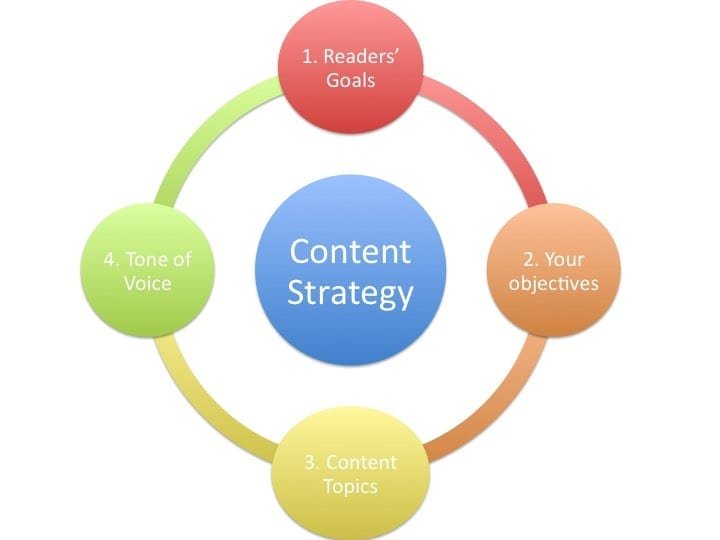
A successful content strategy gives every piece of content a purpose. It helps you understand who you are trying to reach, what those people need to know, which topics deserve your attention, and how your content can support your business goals.
You do not need to publish every day or be present on every platform. You need a practical plan that you can maintain and content that genuinely helps your audience.
In this guide, we will break down how to build a content marketing strategy that supports visibility, builds trust, and creates meaningful opportunities for your business.
What Is a Content Marketing Strategy?
A content marketing strategy is a plan for creating, publishing, distributing, and evaluating useful content to achieve specific business objectives.
That content might include blog articles, guides, case studies, videos, newsletters, social media posts, or other resources that answer questions your audience cares about.
The strategy connects these individual pieces into a larger plan.
For example, a business that offers digital services might publish an article explaining a common website problem, create a checklist that helps readers assess their current website, and link to a relevant service page for people who need professional assistance.
Each piece has a role. The article attracts people looking for information, the checklist helps them take action, and the service page explains how the business may be able to help.
Without a strategy, content often becomes a collection of unrelated posts. With one, every topic has a reason to exist.
Why Your Business Needs a Content Marketing Strategy
Content marketing can support business growth in several ways, but its value depends on how well the content matches your audience’s needs.
1. Attract the Right Audience
A large audience is not necessarily a useful audience.
If your content attracts people who are unlikely to need your products or services, it may generate attention without creating meaningful business opportunities.
A focused strategy helps you choose topics related to the problems your potential customers are trying to solve.
For example, a business selling project management software might benefit more from publishing a practical guide to managing distributed teams than from creating a generic article about productivity with no connection to its offering.
The goal is to attract people who are relevant to your business, not simply to increase page views.
2. Build Trust Before the First Conversation
People often research their options before contacting a business.
They may compare providers, look for explanations, read reviews, or try to understand which solution fits their situation.
Helpful content allows your business to answer these questions before a sales conversation begins.
Clear explanations, practical examples, transparent guidance, and useful resources can demonstrate that you understand the problems your audience faces.
Trust develops when the content is genuinely useful, not when every article repeatedly claims that the business is the best.
3. Support Search Engine Visibility
Search engines help people discover information when they have a question or need.
Creating useful content around relevant topics gives your website opportunities to appear for searches related to your business.
However, publishing more articles does not automatically improve rankings. Content needs to be helpful, relevant, accessible, and clearly presented. It should also offer something worthwhile rather than simply repeating existing information.
Google explains its approach to creating useful, people-first content in its official guidance for website owners.
4. Help Customers Make Decisions
Not every potential customer is ready to buy immediately.
Some people are still learning about a problem. Others understand the problem but are comparing possible solutions. Some are ready to choose a provider and need answers to specific questions.
A strong content strategy supports these different stages.
Educational articles can explain a problem, comparison guides can help readers evaluate options, and service pages can clarify what working with your business involves.
When the content matches the reader’s stage, the next step feels more natural.
5. Create Long-Term Value From Your Effort
A useful article can continue attracting relevant visitors long after its publication date, provided that the topic remains relevant and the page performs well.
That makes content different from many short-lived promotional activities.
Older content may still need updates, better examples, or improved internal links. Nevertheless, a well-maintained library of useful resources can become a valuable part of your website over time.
How to Build a Content Marketing Strategy Step by Step
You do not need an elaborate document to begin. A clear set of decisions is often enough to establish a workable strategy.
Step 1: Set Clear Business Goals
Start by deciding what you want your content to achieve.
Possible goals include increasing relevant organic traffic, attracting qualified enquiries, helping customers understand your services, building an email audience, or supporting existing customers.
Choose one primary goal and a small number of supporting objectives.
For example, if your priority is lead generation, your strategy might focus on publishing articles that address problems potential customers actively search for and connecting those articles to relevant service pages.
Clear goals help you judge whether a content idea deserves your time.
Step 2: Understand Your Target Audience
Before deciding what to publish, understand the people you want to reach.
Think about their challenges, questions, level of knowledge, concerns, and reasons for delaying a decision.
Useful sources of insight include customer conversations, sales enquiries, support requests, website search data, reviews, and discussions in relevant professional communities.
Imagine that customers frequently ask why their business websites receive traffic but generate few enquiries. That repeated question could become a detailed article explaining common causes and practical ways to investigate them.
The strongest content ideas often come from real questions rather than brainstorming alone.
Step 3: Research Topics and Search Intent
Keyword research helps you understand the language people use when searching for information.
However, choosing a keyword is only part of the process. You also need to understand what the searcher wants to accomplish.
Someone searching for “what is content marketing” probably wants an explanation. Someone searching for “content marketing agency pricing” is likely evaluating costs and possible providers.
The content should match that intent.
You can use Google Trends to explore search interest over time and Google Search Console to review queries that already bring visitors to your website.
Build a topic list that balances audience relevance, business value, and your ability to provide a genuinely useful answer.
Step 4: Create Content Pillars
Content pillars are the main subject areas around which your content is organised.
They make it easier to maintain a consistent direction and prevent your publishing schedule from becoming a random collection of topics.
For a digital services business, possible content pillars might include:
Website strategy and design: Topics covering usability, navigation, website planning, and customer experience.
Search engine optimisation: Guides about keyword research, on-page SEO, content quality, and search visibility.
Business automation: Practical explanations of how digital tools can reduce repetitive work and improve processes.
Digital growth and measurement: Content about analytics, conversion tracking, online marketing, and evaluating results.
These are illustrative examples. Your actual pillars should reflect your business’s services, expertise, and audience.
Each pillar can support several related articles, allowing you to build depth on important subjects rather than covering every topic superficially.
Step 5: Build a Realistic Content Calendar
A content calendar turns your strategy into an actionable schedule.
It can be as simple as a spreadsheet containing the topic, target audience, primary keyword, content format, planned publication date, and next step for the reader.
You might plan two strong articles per month rather than committing to five articles every week and struggling to maintain the schedule.
Consistency matters, but quality and sustainability matter too.
Leave room for timely topics, customer questions, and updates to older content. A calendar should guide your work, not prevent you from responding to useful opportunities.
Step 6: Create Content That Actually Helps
Once a topic is selected, focus on solving the reader’s problem.
A useful article generally explains the issue clearly, offers practical guidance, uses examples where appropriate, and helps readers understand what to do next.
Avoid writing lengthy introductions that delay the answer. Use headings to organise the information, and remove paragraphs that repeat the same point without adding value.
If you make a factual claim, support it with reliable evidence when necessary. If you offer an example, make sure readers can distinguish it from a verified customer result.
Your experience, original analysis, and practical explanations can make content more useful than another generic article repeating familiar advice.
Step 7: Optimise Content for SEO Naturally
Search optimisation should make your content easier to understand and discover, not make it awkward to read.
Use a clear page title, a descriptive URL, a logical heading structure, and a relevant focus keyword where it fits naturally.
Include related terms when they help explain the subject. Link to relevant pages on your own website so readers can explore connected topics, and reference authoritative external sources when they support important claims.
Write descriptive image alt text for meaningful images. Compress image files where appropriate, and make sure the page works well on mobile devices.
Avoid forcing a keyword into every heading or repeating it unnaturally. Search engines and readers both benefit from content that communicates clearly.
Step 8: Distribute Your Content
Publishing an article is not the same as ensuring that people discover it.
Depending on your audience, you might share a useful summary on LinkedIn, include the article in an email newsletter, create a short video explaining one key idea, or link to it from related resources on your website.
Choose distribution channels that make sense for your business and the people you want to reach.
You can also repurpose an article into several smaller pieces of content, provided each version is adapted to its format rather than copied without thought.
The goal is to help relevant people discover useful information, not to post the same link everywhere simply to increase activity.
Step 9: Measure Results and Improve
Review your content performance against the goals you established at the beginning.
For organic search, look at impressions, clicks, relevant search queries, and landing-page performance. For lead generation, review qualified enquiries and the actions visitors take before submitting them.
Analytics tools can help you understand on-site behaviour, while Google Search Console provides information about how pages perform in Google Search.
Do not judge every article using the same criteria. An introductory guide may attract new visitors, while a detailed comparison page may assist people who are closer to making a decision.
Use the evidence to update weak pages, improve internal links, clarify calls to action, and prioritise topics that provide genuine value.
How to Choose the Right Content Formats
Different content formats serve different purposes. You do not need to use all of them.
Blog Articles
Blog articles work well for answering questions, explaining processes, sharing insights, and attracting search traffic.
They are especially useful when your audience needs detailed information before making a decision.
Case Studies
Case studies explain how a particular problem was approached and what happened as a result.
When using real customer examples, ensure the details and results are accurate and that you have permission to share any necessary information.
Guides and Checklists
Guides provide deeper instruction, while checklists help readers apply information to a task.
These formats can be valuable when the audience needs a repeatable process rather than a short explanation.
Videos
Videos can demonstrate a process, explain a complicated idea, or show how a product works.
They are worth considering when visual demonstration makes the information easier to understand and you have the resources to produce them well.
Email Newsletters
Email newsletters give you a way to share useful information with people who have chosen to receive updates.
They can help you maintain a relationship with your audience and bring readers back to relevant resources on your website.
Choose formats based on audience needs and your team’s capacity. A well-written article is more valuable than a poorly produced video created simply because video is popular.
Common Content Marketing Mistakes to Avoid
Even businesses that publish regularly can struggle when their content lacks direction.
Writing only about your business. Readers often want help understanding their own problems before they are ready to hear a sales message. Balance company updates with genuinely useful information.
Chasing every trending topic. A popular topic may generate attention without attracting people relevant to your business. Prioritise subjects that connect audience needs with your expertise.
Publishing without a clear purpose. Every article should serve a defined audience need or business objective. If you cannot explain why a topic matters, reconsider whether it belongs in your plan.
Ignoring older content. Information can become outdated, links can break, and business priorities can change. Review important pages periodically and update them when necessary.
Expecting immediate results. Content performance varies by topic, competition, distribution, website quality, and audience demand. Set realistic expectations and evaluate trends over an appropriate period.
Measuring success only through page views. Traffic is useful, but engagement, relevant enquiries, conversions, and the quality of the audience may be more important for business outcomes.
A Simple 30-Day Content Marketing Plan
If you are starting from scratch, keep the first month manageable.
Week 1: Research and planning
- Identify your primary business goal.
- Write down the questions customers ask most often.
- Choose two or three content pillars.
- Research relevant topics and search intent.
Week 2: Content creation
- Select one high-priority topic.
- Outline the article around the reader’s main questions.
- Write and edit the content.
- Add relevant internal links and trustworthy references.
Week 3: Publishing and distribution
- Publish the article after checking the page and its SEO details.
- Share it through one or two relevant channels.
- Link to it from suitable existing pages.
- Make sure analytics and search monitoring are configured appropriately.
Week 4: Review and prepare
- Check whether the page is being discovered and indexed as expected.
- Review early performance without drawing conclusions from limited data.
- Note questions or gaps that could support future articles.
- Plan the next topic based on your findings.
Thirty days is enough to establish a routine, not necessarily to prove the long-term success of a content strategy. Continue measuring and refining your approach as more information becomes available.
Frequently Asked Questions
How often should a business publish content?
There is no universal publishing frequency. Choose a schedule that allows you to create useful content consistently without compromising accuracy or quality. For some businesses, one strong article every week or two is more realistic than publishing something every day.
How long does content marketing take to produce results?
Results depend on the topic, competition, website authority, distribution, audience demand, and the goal being measured. Some content may attract attention quickly through distribution, while organic search growth often requires more time. Avoid promising a fixed timeline.
Is content marketing only about SEO?
No. SEO is one way content can be discovered, but content marketing can also support email communication, social media, customer education, brand trust, and sales conversations.
What should a small business write about first?
Start with a question your customers frequently ask or a problem your business regularly helps them solve. Create a clear, practical answer and connect it naturally to the relevant product or service when appropriate.
How do I know whether my content marketing strategy is working?
Evaluate it against your original goals. Review relevant search visibility, audience engagement, qualified enquiries, conversions, and other meaningful outcomes. Use the findings to improve the strategy rather than relying on a single metric.
Final Thoughts
A strong content marketing strategy does not require a huge publishing budget or an endless supply of new ideas.
It requires a clear understanding of your audience, a practical set of priorities, and a commitment to creating content that is genuinely worth someone’s time.
Start with the questions your customers need answered. Organise your topics around your expertise, publish at a sustainable pace, distribute the content where relevant people can discover it, and review the results regularly.
Most importantly, remember that content is not successful simply because it exists. It becomes valuable when it helps someone understand a problem, make a decision, or take a useful next step.
If you want to explore digital solutions that can support your business’s online growth, visit HiveRift US.
Build your content strategy around real customer needs, and give every article a clear reason to be published.