
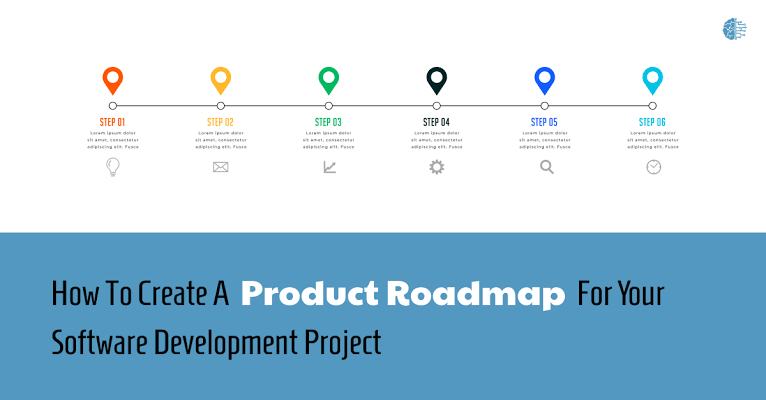
Software Product Roadmap: 7 Smart Planning Tips
Every software product starts with an idea. Perhaps customers keep asking for the same feature. Maybe your team is spending too much time on manual work, or you have spotted a gap in the market that existing tools do not solve well.
At first, the possibilities feel exciting. You start listing features, discussing designs, and imagining what the finished product could do.
Then reality sets in.
The list keeps growing. One person wants a reporting dashboard. Another wants mobile access. Someone else thinks the product needs artificial intelligence. Meanwhile, the features that would solve customers’ biggest problems are still waiting.
This is where a software product roadmap becomes useful.
A roadmap helps you decide what your product should work toward, why those priorities matter, and how your team can move forward without trying to build everything at once. It is not simply a list of features or a promise of exact delivery dates. It is a practical way to connect product decisions with business goals.
Let’s look at seven ways to build one that actually helps.
What Is a Software Product Roadmap?
A software product roadmap is a strategic plan that communicates the direction of a product and the major improvements you intend to pursue.
It may cover customer problems, business objectives, important capabilities, technical improvements, and expected development phases. The exact format depends on the product and the team using it.
For example, a company developing appointment-booking software might organize its roadmap around three goals:
- Make booking easier for customers.
- Reduce the administrative work required from staff.
- Give business owners a clearer view of appointments and revenue.
Features such as automated reminders, simpler booking forms, and reporting tools could support those goals.
Notice the difference: the roadmap begins with outcomes, not a random collection of features.
That distinction makes it easier to evaluate new ideas and explain why some requests must wait.
1. Start With the Problem, Not the Feature
One of the easiest ways to waste development time is to build a feature before understanding the problem it is supposed to solve.
Imagine that several customers request a mobile app. It might seem obvious that building one should become the next priority. But why do they want it?
Perhaps they struggle to use the existing website on their phones. Maybe they need notifications, or perhaps they simply want faster access to a particular function.
Each problem could require a different solution.
Before adding an idea to your software product roadmap, ask:
- Who is experiencing the problem?
- How often does it occur?
- What happens when the problem remains unresolved?
- How are customers handling it today?
- What evidence suggests that solving it would make a difference?
Customer interviews, support conversations, product feedback, and usage data can help you find useful answers.
You will not always have perfect information. That is normal. The goal is to make decisions using the best evidence available instead of treating the loudest request as the most important one.
A feature that solves a frequent, frustrating problem may create more value than a technically impressive feature that only a few people will use.
2. Connect Product Priorities to Business Goals
A roadmap should support the business, not operate separately from it.
If your immediate goal is to attract new customers, you might prioritize improvements to onboarding, product demonstrations, or the first-time user experience.
If customers are leaving because a core workflow is unreliable, stability and usability may matter more than introducing new capabilities.
If the product is growing quickly, performance, maintainability, and infrastructure improvements may become essential.
These priorities can look very different, even for similar products.
Start by identifying two or three meaningful business objectives for the period you are planning. Then evaluate potential product improvements against those objectives.
For example:
| Business objective | Possible product priority |
|---|---|
| Improve customer activation | Simplify the setup process |
| Reduce support workload | Improve self-service help |
| Increase customer retention | Fix recurring workflow problems |
| Support business growth | Improve scalability and maintainability |
This approach also helps when stakeholders disagree. Instead of debating which feature sounds most exciting, you can discuss which option contributes more directly to an agreed business goal.
3. Prioritize Features Using Clear Criteria
Once you have collected ideas, you need a fair way to compare them.
Without clear criteria, product planning can turn into a cycle of urgent requests, personal preferences, and last-minute changes. Development teams may start several projects without finishing the most important ones.
A simple prioritization method can help.
Evaluate each proposed feature using factors such as:
- Customer value: How much does it improve the customer experience?
- Business impact: Does it support revenue, retention, efficiency, or another important goal?
- Evidence: How confident are you that the problem is real and the solution will help?
- Effort: How much development, testing, and maintenance will it require?
- Risk: Are there technical, security, compliance, or dependency concerns?
You can score these factors using a consistent scale, but do not let the numbers create a false sense of certainty. A score is a decision aid, not proof that one feature will succeed.
Consider two potential improvements. Feature A would make a common customer task easier and requires modest effort. Feature B introduces a complex capability that might appeal to a smaller group but requires substantial development.
Feature B could still be the right investment, but it should have a convincing reason to outrank Feature A.
Good prioritization means understanding the trade-off rather than automatically choosing the easiest or most exciting option.
4. Divide the Roadmap Into Meaningful Horizons
A roadmap becomes difficult to use when every task is presented as equally urgent.
One useful approach is to group work into planning horizons.
Now: Work that is currently important and sufficiently understood to begin.
Next: Improvements that are likely to follow but may depend on current work or additional validation.
Later: Opportunities worth exploring without committing to immediate delivery.
These labels are often more useful than assigning an exact launch date to every idea months in advance.
Software development involves uncertainty. A technical dependency may take longer than expected, customer feedback may change the direction, or testing may uncover a problem that needs attention.
Planning horizons let your team communicate direction while leaving room to respond to new information.
For work with firm external deadlines, you may still need target dates and detailed delivery plans. The important distinction is between a strategic roadmap and a delivery schedule. They serve related but different purposes.
Your roadmap should help people understand what matters and why. It should not create the illusion that every future decision has already been settled.
5. Make Technical Improvements Visible
Product roadmaps often become dominated by features customers can see. That is understandable because new features are easy to demonstrate.
But software also needs work that users may never notice directly.
A database may need restructuring. An old dependency may need replacing. Automated tests may be missing. Monitoring may be inadequate, or a frequently used workflow may be more fragile than it appears.
Ignoring these issues can make future development slower and riskier.
For example, adding three new reporting features may sound productive. But if the reporting system already struggles with larger datasets, improving its underlying architecture might be the more responsible decision.
Technical improvements should be explained in business terms wherever possible. Instead of simply writing “refactor reporting module,” explain that the work is intended to improve reliability, reduce the risk of errors, or make future reporting features easier to deliver.
Not every technical task belongs on an executive-level roadmap. However, significant technical risks and investments should be visible to the people making product decisions.
A roadmap that includes both customer-facing improvements and essential technical work gives a more honest picture of where development effort needs to go.
6. Give Stakeholders a Clear View of Priorities
A roadmap loses much of its value when different people interpret it differently.
Sales teams may assume that a feature will be available next month. Developers may understand it as an early idea. Leadership may believe the feature is already approved.
These misunderstandings create unnecessary pressure and disappointment.
Make your roadmap clear enough that everyone can understand the status of each initiative. Distinguish between ideas under consideration, planned work, active development, and completed improvements.
Explain why major priorities were selected and what trade-offs they involve. When something changes, communicate the reason rather than silently moving it to a different position.
It also helps to define who makes the final product decisions. Customers, sales teams, developers, designers, and business leaders can all contribute valuable information, but responsibility for prioritization should be clear.
For distributed teams, a shared roadmap tool can make updates easier to find. A well-maintained document can work just as well for a smaller team.
The goal is not to create more meetings or documentation. It is to reduce confusion so that people can make better decisions and focus on the work that matters.
7. Review the Roadmap as Your Product Evolves
A software product roadmap should provide direction without becoming a document nobody is allowed to change.
Markets shift. Customer needs develop. Competitors introduce new capabilities. Internal data may reveal that a popular feature is rarely used or that a seemingly minor improvement has a much greater impact than expected.
Your roadmap needs a review process that reflects those realities.
Set a regular review schedule that suits your product, such as monthly discussions for a fast-changing product or quarterly reviews for a more stable business application.
During each review, consider:
- Which planned improvements have been completed?
- What have customers and users told us?
- Are our business objectives still the right ones?
- Have new risks or dependencies emerged?
- Should any priorities be added, removed, or reordered?
- What have we learned from recently released features?
Avoid changing priorities simply because a new idea arrives. A change should have a reason, such as new evidence, a meaningful business need, or a risk that cannot reasonably be ignored.
When a priority changes, explain the decision and its consequences for other work.
This keeps the roadmap useful without forcing your team to follow an outdated plan.
Common Product Roadmap Mistakes to Avoid
Even a well-intentioned roadmap can become ineffective when it is managed poorly.
Treating every request as a commitment: A suggestion is not automatically approved work. Make its status clear.
Adding too many priorities: When everything is urgent, the team struggles to identify what deserves attention first.
Ignoring development effort: A feature’s potential value matters, but so do its cost, complexity, dependencies, and ongoing maintenance.
Promising distant delivery dates too early: Long-range estimates should reflect uncertainty rather than imply guaranteed delivery.
Leaving out technical risks: Neglected reliability or maintainability problems can eventually affect delivery speed and product quality.
Failing to explain changes: When priorities shift without context, stakeholders may lose confidence in the planning process.
The solution is not a more complicated roadmap. It is a clearer one, supported by sensible decisions and regular communication.
Conclusion: Build a Roadmap That Helps You Make Better Decisions
A useful software product roadmap does more than show what your team plans to build. It explains which problems deserve attention, how product work supports business goals, and why certain investments should come before others.
Start with customer needs. Connect priorities to measurable objectives. Compare ideas using consistent criteria, make technical work visible, and communicate changes honestly.
Most importantly, remember that a roadmap is a decision-making tool, not a competition to fit the most features into a timeline.
If your business is planning a new digital product or improving an existing application, a clear roadmap can help your team use its time more deliberately. Explore HiveRift US to learn more about web and software development services and how a structured development approach can support your business goals.
Frequently Asked Questions
1. What is the purpose of a software product roadmap?
A software product roadmap communicates the product’s direction, key priorities, and intended outcomes. It helps teams connect development work with customer needs and business objectives.
2. What should a software product roadmap include?
It may include strategic goals, customer problems, major initiatives, feature priorities, technical improvements, dependencies, ownership, and planning horizons. The level of detail should suit the audience and product.
3. How often should a product roadmap be updated?
Review it regularly based on how quickly your product and market change. Monthly or quarterly reviews can work well, with additional reviews when significant new information or risks emerge.
4. Who should be involved in product roadmap planning?
Product managers or owners often coordinate planning, with input from customers, developers, designers, sales, support, and business leadership. The final decision-making responsibility should be clearly defined.
5. What is the difference between a product roadmap and a product backlog?
A roadmap communicates strategic direction and major priorities. A backlog contains more detailed work items, such as features, improvements, bugs, and technical tasks that may be considered for development.
6. Should a product roadmap include exact release dates?
Only when the dates are sufficiently justified and the commitment is appropriate. For uncertain future work, planning horizons or target windows can communicate direction without promising more precision than the team has.
7. How do you measure whether a product roadmap is successful?
Measure the outcomes it was designed to support. Depending on the product, these may include improved customer activation, fewer support requests, better retention, greater operational efficiency, or more reliable product performance. Track outcomes rather than counting released features alone.