
MVP Development: 7 Smart Ways to Test Your Business Idea
You have a business idea. You can already imagine how the product will look, what features it will offer, and how customers might use it. The excitement is real—but there is one important question you should answer before spending months building it: Will people actually use it?
This is where MVP development becomes useful.
Instead of building a complete software product right away, you start with a simpler version that solves one important customer problem. You release it to a limited group of users, learn from their experience, and use that feedback to decide what should happen next.
This approach can help startups, small businesses, and established companies avoid unnecessary development work. More importantly, it replaces assumptions with real-world learning.
What Is MVP Development?
MVP stands for Minimum Viable Product. It is an early version of a product that includes enough essential functionality to deliver value to its intended users and help a business test its assumptions.
Think of a business planning to launch an appointment-booking application. The team might imagine adding online payments, automated reminders, customer profiles, reports, loyalty rewards, and dozens of other features.
But do customers first need all those features? Maybe not.
An MVP might begin with appointment listings, available time slots, and a simple booking process. Once people start using it, the business can learn which additional features are genuinely needed.
The goal is not to create a poor-quality product. It is to build a focused, usable first version without investing in features that have not yet proved their value.
Why Is MVP Development Important for Businesses?
Building software takes time, money, planning, and coordination. When a team develops a large product based only on assumptions, it risks investing in features customers may never use.
A well-planned MVP helps businesses learn before making bigger commitments.
Here are some practical benefits:
- Lower initial investment: Start with the essential functionality instead of funding every possible feature.
- Faster feedback: Put a usable product in front of real users sooner.
- Better product decisions: Use customer behaviour and feedback to guide development.
- Clearer priorities: Understand which features solve meaningful problems.
- More controlled risk: Identify major usability or business-model issues before expanding the product.
An MVP cannot guarantee success. However, it can help a business discover problems earlier, when changing direction is often easier.
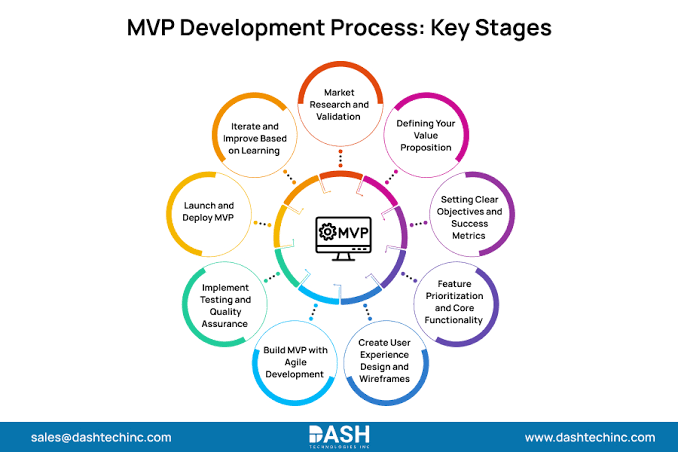
7 Smart Ways to Approach MVP Development
1. Start With One Specific Customer Problem
Before discussing technology, identify the problem your product is supposed to solve.
For example, a small logistics company may struggle to track deliveries through scattered spreadsheets and phone calls. Its team does not necessarily need a complex enterprise platform on day one. It may need a simple dashboard that shows delivery status and assigned drivers.
Ask yourself:
- Who experiences this problem?
- How are they dealing with it today?
- What makes their current solution frustrating?
- Would solving this problem be valuable enough for them to use a new product?
These questions help you avoid building something that looks impressive but has no clear purpose.
2. Identify the Features Users Actually Need
Feature lists grow quickly when everyone contributes ideas. One person wants advanced reports, another wants chat, and someone else suggests an AI assistant.
Those ideas may be useful later. They do not all belong in the first release.
Divide your ideas into three groups:
- Essential: The product cannot solve its main problem without these features.
- Useful later: These features can improve the experience after the core solution works.
- Unproven extras: These ideas need more research before development begins.
For a basic appointment-booking platform, creating a booking and viewing its status might be essential. Custom themes and advanced business reports could wait.
Good MVP development means making thoughtful decisions about what to leave out—not simply squeezing the entire product into a smaller budget.
3. Talk to Potential Customers Before Coding
One of the most expensive mistakes is assuming you understand customers without speaking to them.
Before development starts, talk to people who might use the product. Ask about their current routines, difficulties, workarounds, and previous attempts to solve the problem.
Avoid asking only, “Would you use an app like this?” People may say yes to be polite, even if they would never pay for it or change their habits.
Instead, ask questions such as:
- How do you handle this task today?
- What takes the most time?
- What happens when the process goes wrong?
- Have you paid for a solution before?
- What would make you switch from your current method?
This early research helps you define a more realistic product. The U.S. Small Business Administration’s market research guidance is also a useful starting point for understanding customers and competitors.
4. Build a Simple Prototype Before the Full Product
You do not always need working software to test an idea.
A prototype can show the main screens, user journey, and expected interactions. It gives potential users something concrete to react to before significant development resources are committed.
Imagine creating a customer portal for a service business. A prototype could demonstrate how customers would log in, check request status, and find important documents.
Watching someone try to complete these tasks can reveal confusing labels, unnecessary steps, and missing information.
A prototype is not the same as a functional MVP. The prototype helps test the experience and concept; the MVP lets users interact with a working product. Depending on the project’s uncertainty, you may benefit from one or both.
5. Choose Technology That Supports Future Growth
Starting small does not mean ignoring software quality.
The technology you choose should fit the product’s needs, the team’s skills, the expected workload, and the available budget. A simple application may not need a complicated architecture, but it should still be secure, maintainable, and reliable enough for its intended use.
Consider the basics:
- A suitable framework and database.
- Secure authentication where required.
- Appropriate access controls for sensitive information.
- Error handling and basic monitoring.
- A maintainable code structure.
- A practical plan for backups and future updates.
The right technical decisions depend on the product. The aim is to avoid both extremes: overengineering a small first release and building something so fragile that the team must rebuild it immediately.
If you need help planning a product’s technical foundation, explore the software and web solutions available through HiveRift.
6. Launch With a Small, Relevant Group of Users
A launch does not need to involve every potential customer.
Start with a manageable group of people who genuinely experience the problem. Explain what the early product can do, what limitations it has, and how they can report issues.
Then observe how they actually use it.
Do they complete the main task? Where do they get stuck? Which features do they ignore? Do they return to the product after their first visit?
This is where real learning begins. A feature that sounded essential during planning may prove unnecessary, while a small improvement might make the product much easier to use.
Keep the feedback process simple. Short interviews, support messages, usability sessions, and relevant product usage data can all help you understand what is working.
7. Improve the Product Based on Evidence
After the first release, resist the urge to add every requested feature immediately.
Look for repeated patterns. If several users struggle with the same step, investigate it. If users consistently ask for the same missing capability, assess whether it supports the product’s core purpose.
Track a few meaningful measures, such as:
- How many users complete the main task.
- How many return after their first use.
- Where users abandon the process.
- How often users encounter errors.
- Whether customers are willing to pay, where relevant.
The right measures depend on the business model. A booking product, for example, might focus on completed bookings, while an internal workflow tool might measure task completion time.
Use the findings to decide whether to improve the current solution, test a different approach, or invest in additional functionality. An MVP should create a learning cycle, not become a permanent excuse to leave the product unfinished.
Common MVP Development Mistakes to Avoid
Even a sensible idea can go off track if the team misunderstands what an MVP is meant to achieve.
Building too many features: A first release becomes harder to manage when every suggestion is treated as essential.
Confusing minimum with low quality: Users should still be able to complete the product’s main task reliably.
Skipping customer research: Without understanding the problem, the team may build a technically sound product that solves the wrong issue.
Ignoring security and privacy: An early release still needs appropriate safeguards for the information it handles.
Collecting feedback without acting on it: Feedback is valuable only when it informs decisions.
Failing to define success: Decide in advance what you want to learn and which signals would justify the next investment.
Avoiding these mistakes keeps the product focused and makes early development more purposeful.
How Much Does MVP Development Cost?
There is no single price for MVP development. The cost depends on the product’s complexity, number of user roles, integrations, design requirements, security needs, technology choices, and development team’s experience.
A simple web application with a limited set of features will generally require less work than a marketplace with separate customer and seller accounts, payment processing, messaging, and an administrative dashboard.
To plan a realistic budget:
- Define the core problem and intended users.
- List the essential features for the first release.
- Identify required integrations and security needs.
- Agree on the scope and expected deliverables.
- Keep some budget available for testing and improvements after launch.
Do not compare development proposals on price alone. Make sure each proposal covers a similar scope, quality expectations, testing approach, and post-launch support.
Is MVP Development Right for Your Business?
MVP development can be especially useful when you are launching a new software product, exploring an unfamiliar market, or introducing a digital solution to a problem that has not yet been fully validated.
It may be less suitable to release an extremely limited version when customers require a high level of reliability, when regulations demand specific capabilities, or when missing features would make the product unsafe or unusable.
The right starting point is not necessarily the smallest product imaginable. It is the smallest responsible product that can deliver meaningful value and test your most important assumptions.
Conclusion: Test the Idea Before Scaling It
A promising idea deserves careful testing, not blind investment.
MVP development gives businesses a practical way to start with a clear problem, build essential functionality, learn from real users, and improve the product based on evidence. It also helps teams make better decisions about where their time and budget should go next.
You do not need to solve every problem in the first release. You need to solve one meaningful problem well enough to discover what customers value and what the product should become.
Before planning your next software project, define the problem, speak to potential users, and decide what you genuinely need to learn. That simple discipline can make the difference between building a product people merely notice and building one they actually want to use.
Frequently Asked Questions (FAQs)
1. What is MVP development in simple terms?
MVP development is the process of building an early, usable version of a product with essential features so a business can test its idea and learn from real customers before investing in a larger solution.
2. How long does it take to build an MVP?
The timeline depends on the scope, design, technology, integrations, and testing requirements. A focused product may take weeks or months. The best estimate comes after the essential features and project requirements are defined.
3. Is an MVP the same as a prototype?
No. A prototype usually demonstrates a concept, layout, or user journey and may not have working functionality. An MVP is a usable product that delivers core value and helps validate assumptions through real use.
4. Should an MVP include only basic features?
It should include only the features needed to solve the main problem and test the key assumptions. Those features must still work reliably and meet appropriate security, privacy, and quality requirements.
5. Can an established business use MVP development?
Yes. Established companies can use MVP development to test new services, internal tools, customer portals, or software features before committing to a larger rollout.
6. What should happen after an MVP launch?
Gather user feedback, review relevant usage data, identify recurring problems, and prioritize improvements. Based on the evidence, the business can refine the product, add features, test a different approach, or reconsider the idea.