



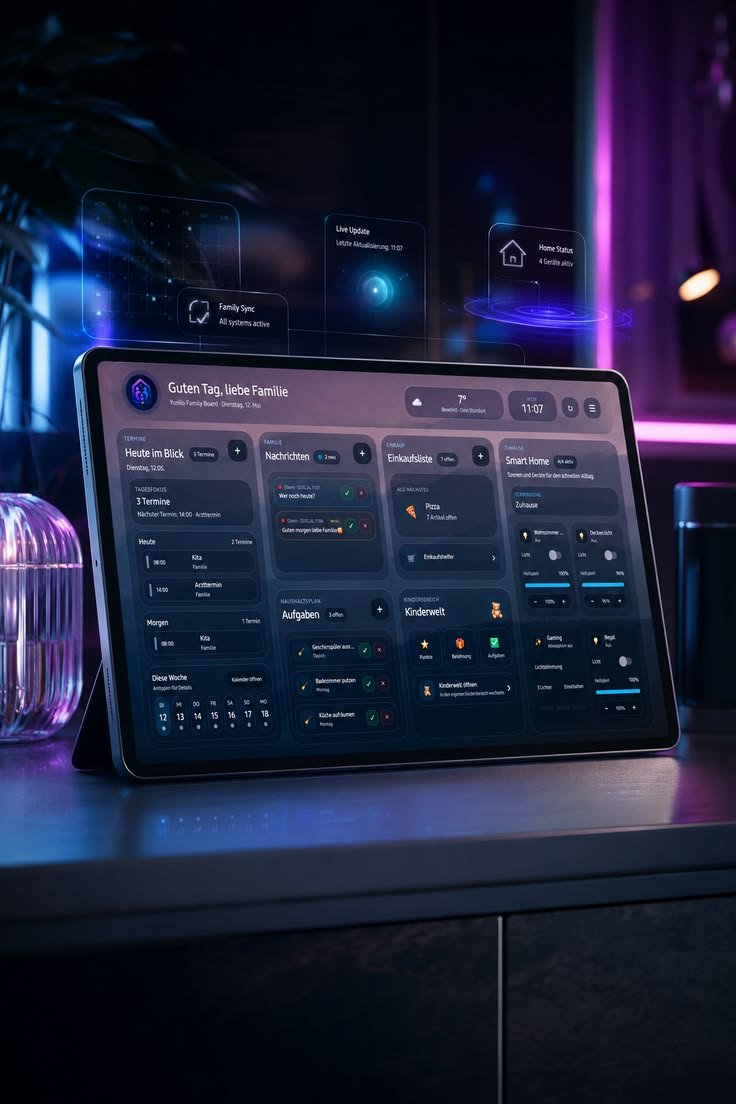
Custom Software Development for Business Growth
Businesses today rely on software for almost every part of their operations. From managing customers and employees to processing orders, tracking data, handling payments, and analyzing performance, software has become an important part of how modern companies operate.
However, not every business can run efficiently with generic software.
As operations become more complex, companies may find themselves using multiple disconnected tools, performing repetitive tasks manually, or changing their workflows to fit the limitations of existing platforms. This is where custom software development can provide a more flexible approach.
Custom software is designed around the specific requirements of a business rather than forcing the business to work around a pre-built system. It can bring workflows, data, integrations, automation, and user experiences together within a solution built for a particular organization.
For businesses planning long-term digital growth, the right custom software can become more than an operational tool. It can become part of the company’s technology infrastructure and competitive advantage.
What Is Custom Software Development?
Custom software development is the process of designing, developing, testing, deploying, and maintaining software specifically for the requirements of a business or organization.
Unlike off-the-shelf software, which is developed for a broad audience, custom software starts with the individual business’s workflows, users, challenges, objectives, and technology environment.
A custom solution may be developed to:
- Automate repetitive business processes
- Manage customers and leads
- Connect multiple business systems
- Create internal workflow platforms
- Manage inventory and operations
- Provide customer portals
- Build SaaS products
- Manage business data
- Create reporting dashboards
- Support specialized industry processes
The objective is not simply to create software with more features. The objective is to create software that solves the right business problems.
Why Businesses Consider Custom Software
Off-the-shelf software can be an excellent choice when a business has standard requirements.
For example, companies may use established tools for email, accounting, project management, communication, or basic customer management.
Problems can arise when a business has unique processes that generic software cannot support efficiently.
Teams may end up creating spreadsheets, using multiple systems, manually transferring information, or relying on workarounds.
Over time, these processes can create operational friction.
Custom software provides another option: instead of adapting the business to the software, the software can be designed around the business.
Recent industry discussions around custom software continue to highlight workflow fit, integration, scalability, and long-term control as important reasons businesses consider purpose-built solutions.
Key Benefits of Custom Software Development
1. Software Built Around Your Business
One of the biggest advantages of custom software is that functionality can be designed around actual business requirements.
Instead of paying for dozens of features that may never be used, businesses can prioritize the workflows and capabilities that matter most.
For example, a company may need a custom approval system, specialized reporting, customer portal, inventory workflow, or automated quotation process.
These requirements can become part of the software architecture.
2. Improved Operational Efficiency
Manual processes can consume significant employee time.
Employees may have to enter the same information into multiple systems, move data between spreadsheets, generate reports manually, or repeatedly perform routine administrative tasks.
Custom software can automate appropriate parts of these workflows.
Automation can help reduce repetitive work, improve consistency, and allow employees to spend more time on tasks that require judgment and human interaction.
3. Integration With Existing Systems
Modern businesses rarely operate with one software system.
A company might use:
- CRM software
- ERP systems
- Accounting platforms
- Payment gateways
- Marketing platforms
- Customer support systems
- Inventory software
- Analytics platforms
- Internal databases
- Third-party APIs
When these systems operate separately, data can become fragmented.
Custom software can be designed to communicate with existing systems through APIs and other integration methods.
This can help create a more connected technology environment.
4. Better Scalability
Business requirements change as companies grow.
A system that works for a small team may become difficult to manage when the company adds more employees, customers, locations, products, or transactions.
Custom software can be architected with future growth in mind.
Depending on the technology and architecture, businesses can add new modules, users, integrations, workflows, and capabilities without replacing the entire system.
5. Greater Control Over Functionality
With generic software, the product roadmap is controlled by the software provider.
Businesses must generally work within the provider’s available functionality and development priorities.
With custom software, the organization has greater control over how the product evolves.
New features can be planned according to business priorities rather than waiting for a third-party vendor to introduce them.
6. Improved Data Management
Businesses generate large amounts of information every day.
Custom applications can be designed around the specific data a business needs to collect, organize, process, search, analyze, and report.
This can make it easier to create dashboards and reports that are relevant to actual business decisions.
7. Competitive Differentiation
Businesses often have processes that make them different from their competitors.
A specialized quoting process, customer experience, operational workflow, marketplace model, logistics system, or internal process may represent a competitive advantage.
Custom software can help turn these processes into digital capabilities.
Competitors may use the same commercial software products, but a business’s custom workflows can be designed around its own strategy and operating model.
Custom Software vs. Off-the-Shelf Software
Custom software is not automatically better than off-the-shelf software.
The right choice depends on the business requirements.
| Custom Software | Off-the-Shelf Software |
|---|---|
| Built around specific requirements | Built for a broad market |
| Highly customizable | Limited to available features |
| Can integrate around specific workflows | Integrations depend on the provider |
| Greater control over functionality | Provider controls product roadmap |
| Can scale with specific business needs | Scaling depends on the product |
| Higher initial development investment | Usually faster to start |
| Requires ongoing maintenance | Provider generally manages the core product |
For standard requirements, an existing software product may be more practical.
Custom development becomes more attractive when business processes are specialized, systems need deeper integration, or existing tools are creating operational limitations.
Signs Your Business May Need Custom Software
Not every company needs custom software.
However, the following signs may indicate that it is worth exploring:
Your Team Relies Heavily on Spreadsheets
Spreadsheets can be useful, but they may become difficult to manage when multiple employees depend on constantly changing operational data.
Employees Repeat the Same Manual Tasks
If employees regularly copy, transfer, validate, or organize the same information across multiple systems, automation may provide an opportunity for improvement.
Your Software Does Not Match Your Workflow
If employees have to create workarounds because the software does not support your actual process, a custom solution may provide a better fit.
Your Systems Do Not Communicate
Disconnected systems can create duplicate data and manual processes.
Custom software can help connect important business systems.
You Need Specialized Features
If your business requires functionality that is not available in existing platforms, custom development may be appropriate.
Your Business Is Growing Rapidly
Rapid growth can expose limitations in existing systems.
A scalable software architecture can help businesses prepare for increasing users, transactions, data, and operational complexity.
Types of Custom Software Solutions
Custom software development can cover many different business requirements.
Custom Business Software
Purpose-built software can help companies manage specific internal processes, operations, employees, customers, or workflows.
Enterprise Software
Large organizations may require integrated platforms supporting multiple departments, locations, user roles, and business processes.
Customer Portals
Customer portals can provide secure access to orders, documents, accounts, support requests, reports, bookings, or other services.
Workflow Management Software
Workflow applications can automate approvals, assignments, notifications, task management, and process tracking.
SaaS Product Development
Businesses developing software products can use custom development to create SaaS platforms designed for external customers.
Business Dashboards
Custom dashboards can bring important operational and performance data together in a centralized interface.
Industry-Specific Software
Industries with specialized processes may benefit from software designed around their particular operational requirements.
Custom Software Development Process
A successful software project starts with understanding the problem before writing code.
1. Discovery and Requirement Analysis
The first step is understanding the business, users, processes, challenges, goals, and technical environment.
This helps define what the software actually needs to accomplish.
2. Solution Planning
Requirements are converted into a technical and functional roadmap.
The team determines the major modules, integrations, workflows, user roles, and technical requirements.
3. UI/UX Design
The user experience is designed before development progresses too far.
Wireframes, user flows, interfaces, and prototypes can help stakeholders understand how the system will work.
4. Software Architecture
The technical architecture determines how the application will handle functionality, data, integrations, security, scalability, and future development.
5. Development
Developers build the application according to the approved requirements and architecture.
Development may include frontend interfaces, backend systems, databases, APIs, integrations, authentication, automation, and administrative functionality.
6. Testing and Quality Assurance
Software is tested to identify functional issues, usability problems, security concerns, integration errors, and performance limitations.
7. Deployment
Once the software has been validated, it can be deployed into the appropriate production environment.
8. Maintenance and Improvement
Software development does not necessarily end at launch.
Businesses may need ongoing updates, security improvements, performance optimization, new features, integrations, and technical maintenance as their requirements change.
Custom Software and Business Automation
Automation is one of the strongest use cases for custom software.
Instead of employees manually completing repetitive processes, software can automate appropriate activities.
For example, a custom system could:
- Receive a customer request
- Create a record automatically
- Assign the request to the appropriate employee
- Send notifications
- Update the CRM
- Generate documents
- Trigger an approval process
- Update reporting dashboards
The exact automation depends on the organization’s workflow.
The important point is that automation should solve a real operational problem rather than simply adding technology for its own sake.
Custom Software and AI
Custom software can also provide a foundation for integrating artificial intelligence into business processes.
AI capabilities can be incorporated into applications for use cases such as:
- Intelligent search
- Document processing
- Recommendations
- Customer support
- Data analysis
- Forecasting
- Workflow automation
- Content generation
- Business intelligence
This can allow AI capabilities to operate within the company’s existing workflows rather than functioning as a completely separate tool.
For businesses exploring AI, the combination of custom software and AI can create opportunities to build specialized applications around proprietary processes and data.
Security Considerations
Security should be considered throughout the software development lifecycle.
Custom applications can incorporate security requirements such as:
- Authentication
- Role-based access control
- Data encryption
- Secure APIs
- Access permissions
- Audit logging
- Secure database design
- Backup strategies
- Monitoring
- Vulnerability management
The appropriate security controls depend on the type of application, data being handled, industry requirements, users, integrations, and deployment environment.
Organizations can also use established cybersecurity frameworks to structure their security programs. The NIST Cybersecurity Framework provides guidance for managing cybersecurity risk across organizations.
How to Make Custom Software Development Successful
Technology alone does not guarantee a successful software project.
Businesses should begin with a clear understanding of the problem they are trying to solve.
A strong project should also have:
- Clearly defined requirements
- Prioritized features
- Identified users
- A realistic development roadmap
- Appropriate technical architecture
- Defined security requirements
- Integration planning
- Testing procedures
- A post-launch maintenance strategy
It is also useful to avoid trying to build every possible feature at once.
A phased approach can allow businesses to launch the most important functionality first, collect feedback, and improve the product over time.
Custom Software for Different Industries
E-Commerce
Custom software can help online businesses manage products, inventory, orders, customers, payments, logistics, and specialized workflows.
Healthcare
Healthcare organizations may require specialized applications for appointments, patient workflows, portals, records, administration, and operational processes while meeting applicable privacy and regulatory requirements.
Logistics
Custom systems can support shipment management, route planning, inventory, fleet operations, tracking, and reporting.
Education
Educational organizations can develop portals, learning systems, student management platforms, admission systems, and administrative applications.
Finance
Financial organizations may require specialized workflows, reporting systems, customer portals, data management, and integrations with financial platforms.
Manufacturing
Manufacturing companies can use custom software for production management, inventory, quality control, procurement, reporting, and operational workflows.
Why Choose HiveRift for Custom Software Development?
HiveRift approaches custom software development from both business and technology perspectives.
We focus on understanding what the software needs to accomplish before determining how it should be built.
Our capabilities can cover:
- Business software development
- Enterprise applications
- Web applications
- SaaS platforms
- Customer portals
- Workflow automation
- API development
- Software integrations
- AI-powered applications
- Cloud-based applications
- UI/UX design
- Software maintenance
This broader technology capability allows custom software projects to connect with other digital requirements instead of being developed as isolated systems.
Build Software Around Your Business
Generic software can be a practical solution for standard business requirements. But when your processes, customers, integrations, or growth plans become more specialized, custom software can provide the flexibility required to build around those needs.
The goal is not simply to develop more software.
The goal is to create a system that helps your business work more efficiently, connect its technology, automate appropriate processes, improve customer experiences, and prepare for future growth.
If your current software is creating limitations, your team is relying on manual workarounds, or you have an idea for a specialized digital product, HiveRift can help you evaluate, design, develop, and scale a custom software solution.
Explore HiveRift’s technology and software development capabilities to see how custom software can fit into a broader digital growth strategy.
Frequently Asked Questions
What is custom software development?
Custom software development is the process of building software specifically around the requirements, workflows, users, and objectives of a particular business or organization.
Is custom software better than off-the-shelf software?
Not always. Off-the-shelf software can be the better choice for standard requirements. Custom software becomes more valuable when a business has unique workflows, specialized requirements, complex integrations, or specific scalability needs.
How much does custom software development cost?
The cost depends on factors such as functionality, complexity, integrations, technology, number of users, security requirements, design, and development time. A detailed estimate normally requires understanding the project requirements first.
How long does custom software development take?
The timeline depends on the scope and complexity of the project. A relatively focused application may take significantly less time than a large enterprise platform with multiple integrations and workflows.
Can custom software integrate with existing systems?
Yes. Custom software can be designed to integrate with existing systems through APIs, databases, third-party services, and other integration technologies where technically appropriate.
Can custom software include AI?
Yes. AI capabilities can be integrated into custom applications for use cases such as automation, document processing, recommendations, search, analytics, customer support, and intelligent workflows.
Is custom software scalable?
Custom software can be designed with scalability in mind. The actual scalability depends on the architecture, technology, infrastructure, application design, data volume, and future requirements.
Does HiveRift provide software maintenance?
Yes. Custom software can require ongoing maintenance, security updates, performance improvements, integrations, bug fixes, and new features as business requirements evolve.
Final Thoughts
Custom software development can give businesses greater control over how technology supports their operations.
When software is designed around real business requirements, it can help reduce manual work, connect systems, improve workflows, support automation, and create a foundation for long-term digital growth.
The right approach begins with the business problem—not the technology.
If your existing tools are limiting your operations or you need a software product built specifically around your business model, now is the right time to evaluate what a custom solution could achieve.
HiveRift helps businesses turn complex requirements into scalable digital software solutions designed around real business needs.


